
Sibilla · predictive maintenance platform
Predictive maintenance, asset by asset.
Sibilla knows how each type of asset fails, reads data from the systems you already run and tells you where to act. On-premise or in the cloud, across all brands.
How it works
From steel to data. From data to action.
What happens between an abnormal vibration and a work order. Follow one case: the turbocharger bearings of a diesel engine starting to wear.
-
1 The asset
Every machine fails in ways we know: wear, imbalance, loss of lubrication, overheating. Degradation leaves traces long before the machine stops.
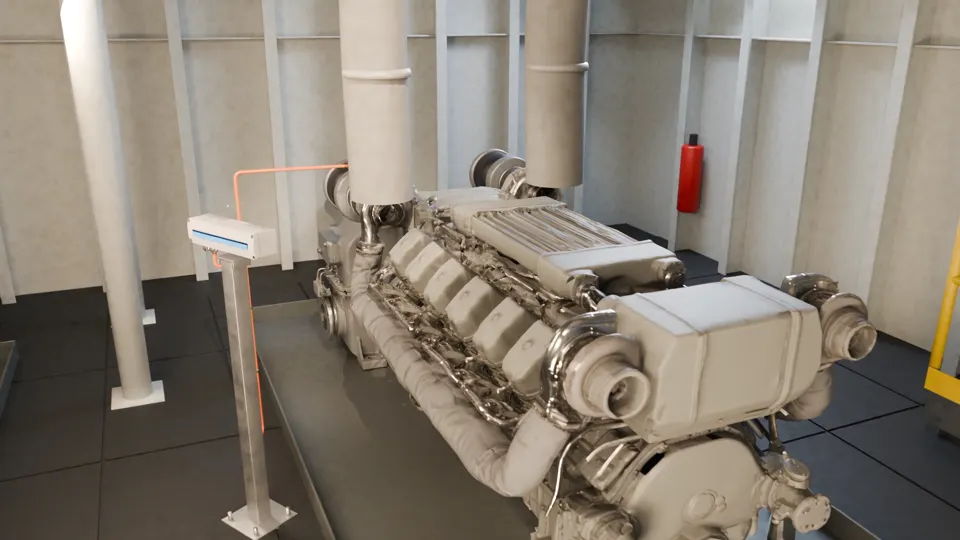
illustrative reconstruction -
2 Teneuro collects what is missing
An accelerometer on the turbocharger bearing housing, a cable, the Teneuro box: vibration and sound, the signals no control system provides. Where the data is already there, nothing needs to be added.
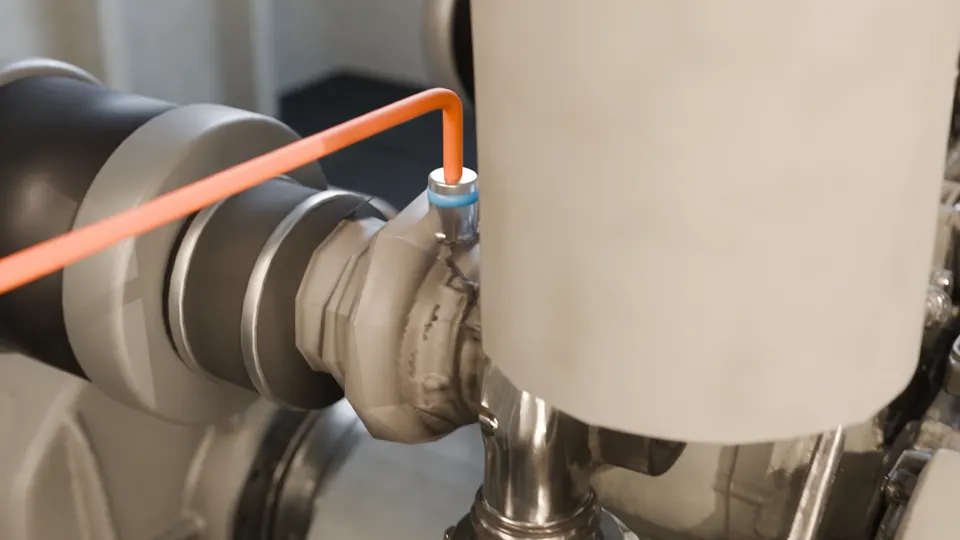
illustrative reconstruction -
3 We read your systems
The vibration becomes a spectrum: the turbocharger's own frequency, and next to it a sub-synchronous component that grows as the bearings wear. Sibilla reads AVEVA PI, OPC UA, MQTT, SQL, CSV and the cloud natively; PLCs and controllers via Modbus with Teneuro in a day; closed systems on a project basis.
Turbocharger DX · accelerometerSub-synchronous / 1×0.06Overall RMS—SourceTeneuro · MQTT- AVEVA PI Native
- OPC UA Native
- MQTT · Teneuro Native
- Modbus · J1939 1-day activation
- Proprietary protocols Project-based
simulated data -
4 Tags become knowledge
A model of your plant (its ontology: asset → component → failure mode → signal, following the ISO 14224 taxonomy) links every raw tag to the component and the failure it can reveal. This is where a generic platform stops and Sibilla begins.
Plant ontologyexample tags -
5 Sibilla measures degradation
The sub-synchronous component, normalised on the rotation frequency, leaves the band expected for a healthy turbocharger. The indicator turns from green to amber: Sibilla notices early on the P-F curve, well before the alarm threshold, and the trend shows how much time is left to act. The maintenance team does not read charts: it sees a traffic light and one clear sentence. Using only analysis engines validated before field use, Sibilla produces diagnostic indicators (KDIs) with confidence bands and links them to the fault tree.
KDI · Turbocharger DX bearingsOKKDI0.06What the maintenance team seesTurbocharger DX · NormalNo action needed.
P-F curve · qualitativesimulated data -
6 The expert decides
Sibilla points to the component, the likely failure mode and the evidence; a person decides the intervention. An agent prepares the case summary for the decision; the work order in your CMMS or ERP (SAP, Maximo and others) is built on a project basis.
Case summary Available- Asset
- Engine V12 · Turbocharger DX
- Likely failure mode
- Bearing wear
- Evidence
- Sub-synchronous vibration (0.45×) out of its expected band; KDI amber
- Suggested check
- Rotor play, oil analysis, boost pressure against load
ApproveEdit Decided by the maintenance leadWork order in your CMMS / ERP: Project-based
Assets
We know how your assets fail, component by component.
Choose your sector and your asset: the five failures that matter, the signals that anticipate them and how we read your systems.
Energy and utilities 8
- Wind turbinesIn operation
- Solar PV plantsIn operation
- Hydro power plantsIn operation
- Diesel and gas engines, gensetsProject-based Blueprint
- Water and wastewater plantsProject-based Blueprint
- Waste-to-energy plantsProject-based Blueprint
- Combined-cycle power plantsProject-based Blueprint
- Secondary substationsProject-based Blueprint
Industry 5
- Electric motors and drivesProject-based Blueprint
- Centrifugal pumpsProject-based Blueprint
- CompressorsProject-based Blueprint
- Fans and blowersProject-based Blueprint
- Machining centresProject-based Blueprint
High-value machinery 6
- Bottling linesProject-based Blueprint
- Automatic packaging machinesProject-based Blueprint
- Injection moulding machines and extrudersProject-based Blueprint
- Food process machinesProject-based Blueprint
- Paper and tissue machinesProject-based Blueprint
- Ceramic tile linesProject-based Blueprint
Agriculture and food 5
- Olive millsProject-based Blueprint
- Cold stores and post-harvestProject-based Blueprint
- Irrigation pumping stationsProject-based Blueprint
- WineriesProject-based Blueprint
- Livestock and biogas plantsProject-based Blueprint
Predictive maintenance does not always pay off. On cheap or redundant assets, or where failures strike without warning signals, good preventive maintenance costs less. We will tell you before we start.
Connectors and Teneuro
Built for the main industrial standards.
OPC UA, MQTT, Modbus, SAE J1939, AVEVA PI, SQL and REST: if your plant has a historian, a SCADA or accessible PLCs, Sibilla reads them as they are, read-only, without touching the machines. Where data is missing, there is Teneuro.
Connectors, at three honest levels
- Native
- Works with no development and no purchases: AVEVA PI (PI Web API), active OPC UA servers, MQTT, SQL, CSV, REST APIs, cloud (Azure, AWS, Google Cloud), weather services, Teneuro.
- 1-day activation
- Configuration and tag mapping: PLCs, controllers and drives via Modbus or J1939 with Teneuro, other historians (SQL/REST), systems whose data already sits in a historian. Any customer-side licence (e.g. an OPC UA option) is listed as a prerequisite.
- Project-based
- Proprietary protocols, closed SCADA systems, paid third-party gateways, outbound integrations to CMMS and ERP.
Teneuro
Teneuro is the acquisition hub we design and build: analogue and digital inputs, fieldbuses, wireless links to cut cabling. It specialises in vibration and sound, the signals no PLC provides: bearings, cavitation, gears. It is affordable, so it can go wherever it is needed, even on hundreds of points.
Discover Teneuro →AVEVA PI, OPC UA and the other names cited are trademarks of their respective owners; they indicate technical compatibility, not a partnership.
Why Sibilla
One platform for the whole plant, not for one brand.
Multi-brand
Manufacturers offer platforms for their own machines. A real plant runs ten different brands: Sibilla sees them all with the same failure model.
On-premise or in the cloud
Your data stays where you decide: in your data centre, in your cloud or in ours. Same platform, deployed with Docker, read-only towards your historian, installable even without internet access.
From signal to action
Readable diagnostic indicators (green, amber, red), fault tree analysis and risk matrices: Sibilla tells you what is giving way and why it matters. The decision stays with you.
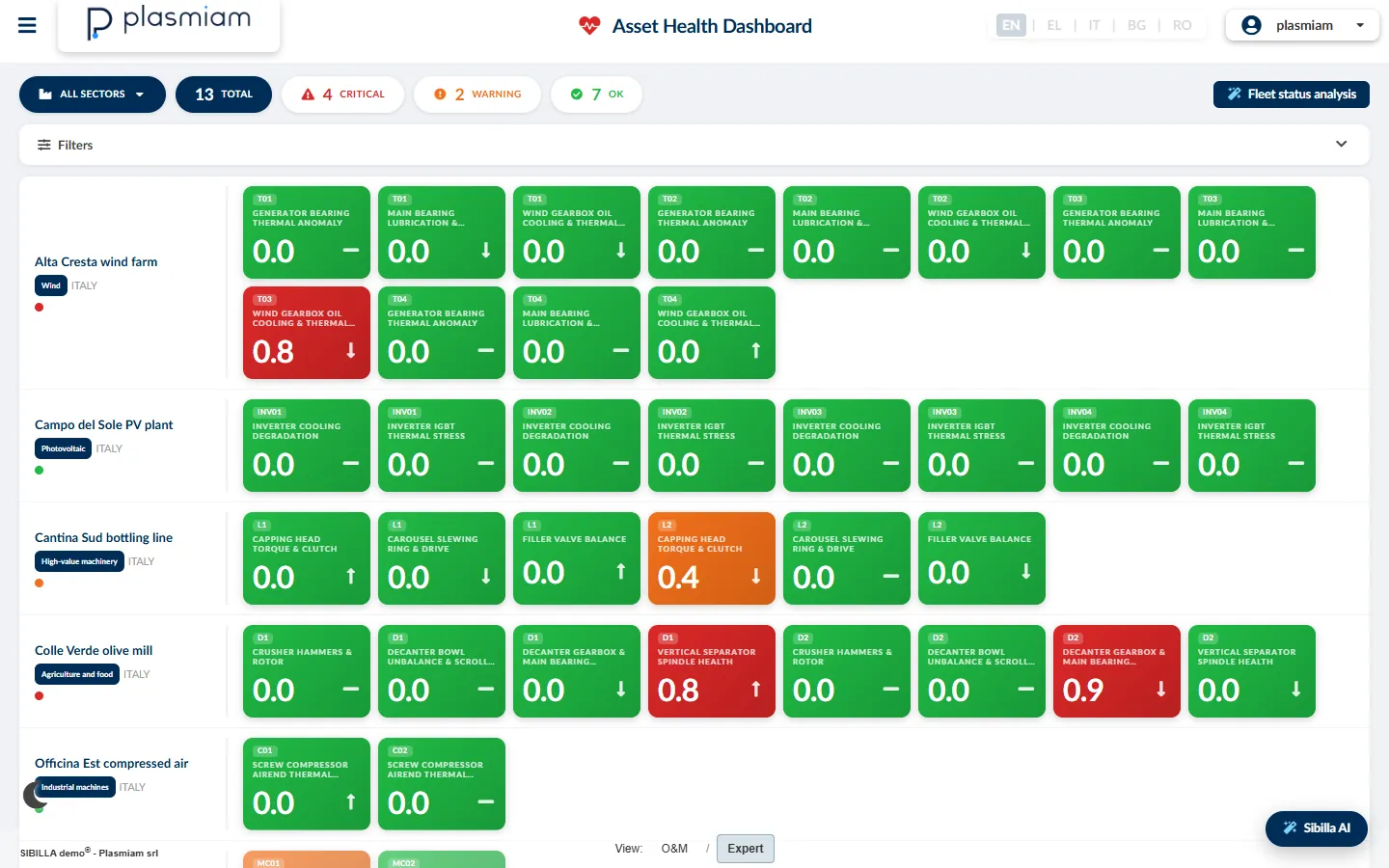
Agents
Agents do the repetitive work. The expert decides.
Every function of Sibilla is open to AI agents through its API and an MCP server: the assistant reads, configures and runs, with a preview, your explicit confirmation and an audit log of every action. Detection stays deterministic and verifiable.
| Stage | What the agent does | Status |
|---|---|---|
| Connectors | Lists historian servers and tags, runs connection diagnostics, registers tags and links them to assets | Available |
| Ontology | Creates and updates assets and Blueprints: signals, degradation patterns, links to the fault tree | Available |
| Engine | Builds models from a Blueprint, clones them across twin units, runs models and data quality checks, reads KDI history and analyses signals | Available |
| Action | Summarises the health of the fleet and the report of each model in plain language | Available Work orders in your CMMS/ERP: Project-based |
Where to start
Where to start.
I run maintenance for a plant.
Tell us your asset, its manufacturer and your control systems: we will show you its failure modes, the signals that anticipate them and how we connect the data.
Request a demo on your asset →I manage a plant or lead innovation.
Start with a pilot on one critical asset, using the data you already have. On-premise or in the cloud; scale when the results are there.
How to start →I build machines.
Offer predictive monitoring of your machines to your customers without developing the platform: Teneuro on board, Sibilla behind it.
For machine builders →Also by Plasmiam: Rivus, water sub-metering for large residential complexes; FrigoCare, the temperature log of every refrigerator, from the pharmacy to the kitchen; Agrohmet, the spray record that fills itself in from the machine; DockTag, the small harbour, its boats and a ledger you can trust; AnemoFlow, wind farm production, turbine by turbine; All products and demos →
Already met us and received an invitation? Demo access is sent by email after our call.
About us
A young company with deep experience.
Plasmiam builds on decades of experience across our team in industrial plants, IT and research: conventional and renewable generation, water, waste-to-energy, power grids. We have designed maintenance processes in SAP on a global scale, and we build the electronics needed to collect the data ourselves. Based in Brindisi, Italy, with projects in Italy and across Europe.
- Hardware and software built in-house
- Twenty years of maintenance processes in SAP, across the team
- On-premise or in the cloud
ISO 9001 certification in progress.
Bring us an asset. We'll show you how Sibilla sees it.
Tell us the asset type, manufacturer and control systems: we'll prepare a demo for your case.
Request a demo on your asset